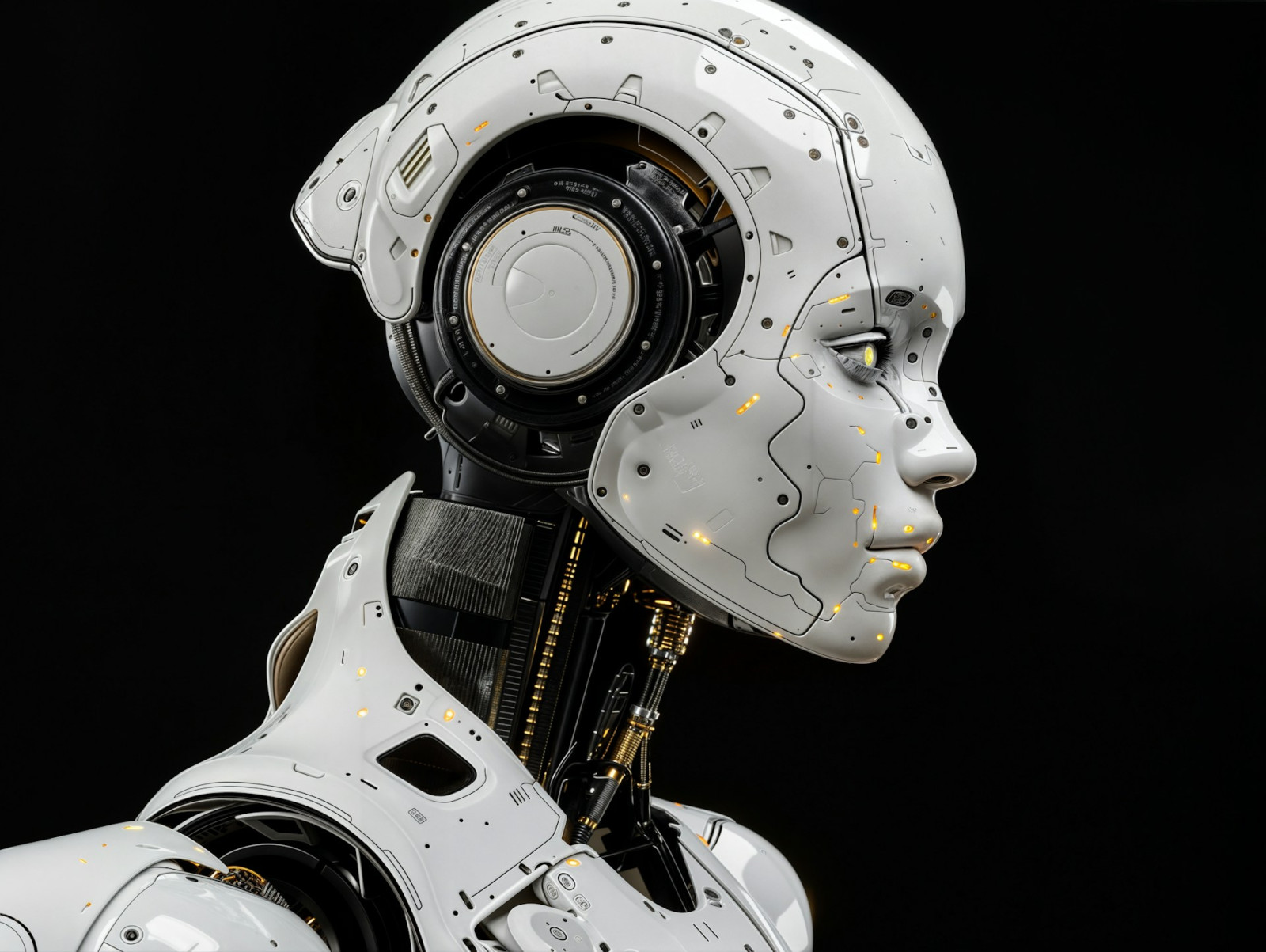
The robot is expected to enter homes in 2028, with an estimated price of $20,000 and a refundable $200 reservation deposit.
Technical Specifications
| Feature | Voxel Series-1 |
| Robot type | Bipedal household assistant |
| Arms | 2 articulated arms |
| Arm mobility | 7 degrees of freedom per arm |
| Wrists | Fully actuated |
| Grippers | 1 degree of freedom each |
| Legs | Z-shaped articulated design |
| Vision | Stereo RGB and wide-field cameras |
| Software | Adaptive operating system |
| Communication | Audio and visual interface |
| Expected price | $20,000 |
| Expected delivery | 2028 |
Battery capacity, runtime, payload, processor specifications, and walking speed have not been disclosed.
Main Capabilities
- Home organization: Identifies and returns misplaced objects.
- Object search: Locates missing keys, phones, and other belongings.
- Object retrieval: Picks up and delivers everyday items.
- Plant care: Waters indoor plants.
- Household adaptation: Designed to learn object locations and household routines.
These functions are planned capabilities, not independently verified production performance.
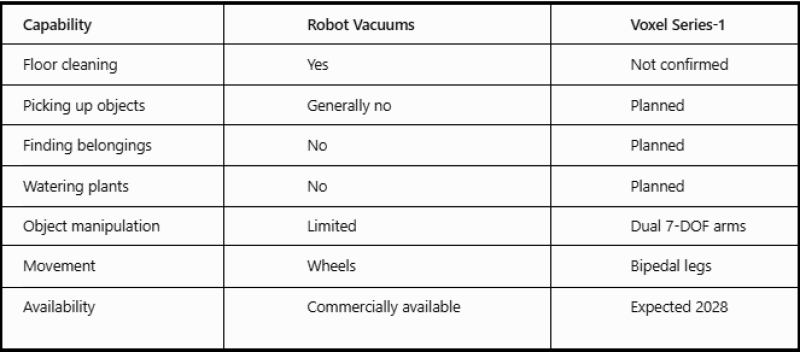
Comparison With Previous Home Robots
Tuesday Labs has not released an earlier Voxel model. The comparison below uses conventional robotic vacuum cleaners as the baseline.
AI and Movement
Voxel combines stereo vision, articulated manipulation, and an adaptive software system.
Its movements and character-like interactions were developed with input from animation specialists. The objective is to make the robot's actions expressive while maintaining functionality.
The company has not released detailed AI architecture specifications or independent autonomy benchmarks.
Price and Availability
| Detail | Status |
| Estimated price | $20,000 |
| Reservation deposit | $200, refundable |
| Production model | Series-1 |
| Expected delivery | 2028 |
| Development stage | Prototype |
Key limitation: Tuesday Labs has not demonstrated independently verified, fully autonomous performance across all advertised tasks. Some demonstrations have involved teleoperation.
Voxel's commercial viability will depend on manipulation reliability, autonomous navigation, battery runtime, and the ability to operate safely in occupied homes.