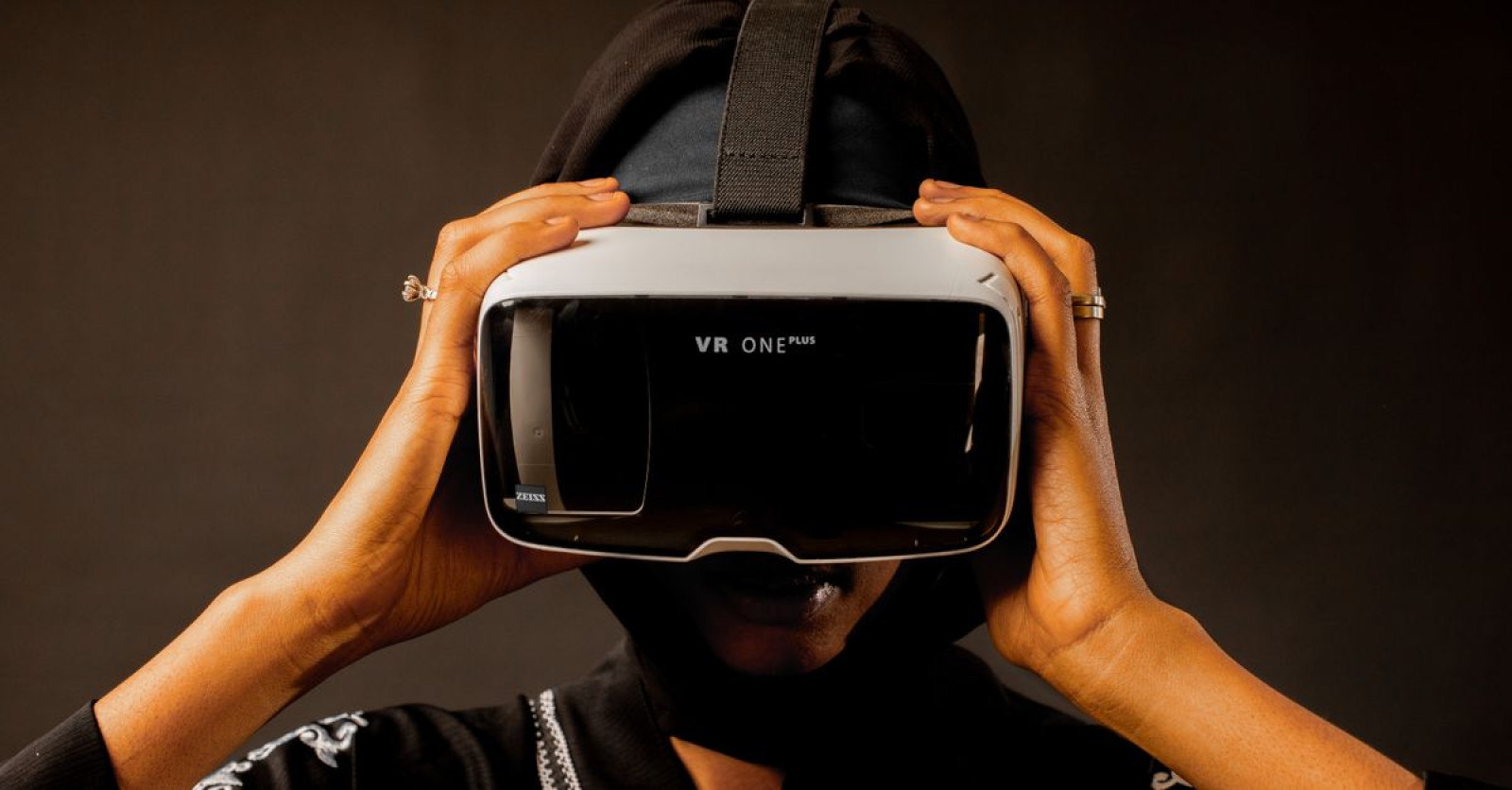
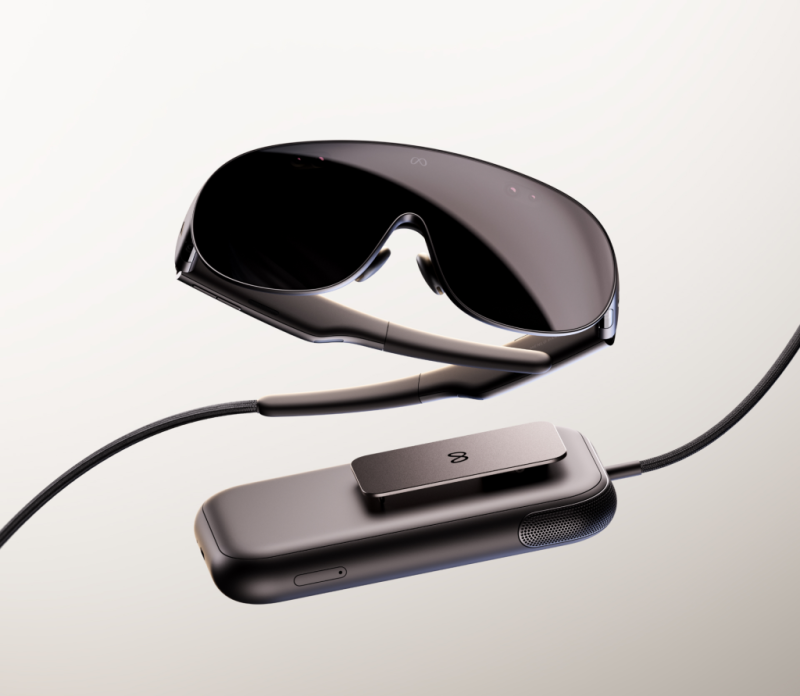
Its main difference from Quest 3 is a split architecture: the processor and battery are moved into an external puck, reducing headset weight to around 100 grams.
Specifications
| Specification | Meta VR Glasses | Meta Quest 3 |
| Weight | ~100 g | 515 g |
| Display | Micro-OLED | LCD |
| Resolution | 2412 × 2288 / eye | 2064 × 2208 / eye |
| Refresh rate | 120 Hz | Up to 120 Hz |
| Pixel density | 37 PPD | ~25 PPD |
| Horizontal FOV | 70° | ~110° |
| Processor | Snapdragon Reality Elite | Snapdragon XR2 Gen 2 |
| RAM | 12 GB | 8 GB |
| Eye tracking | Yes | No |
| Face tracking | Yes | No |
| Hand tracking | Yes | Yes |
| Compute | External puck | Integrated |
| Price | $1,299.99 | $499.99 at launch |
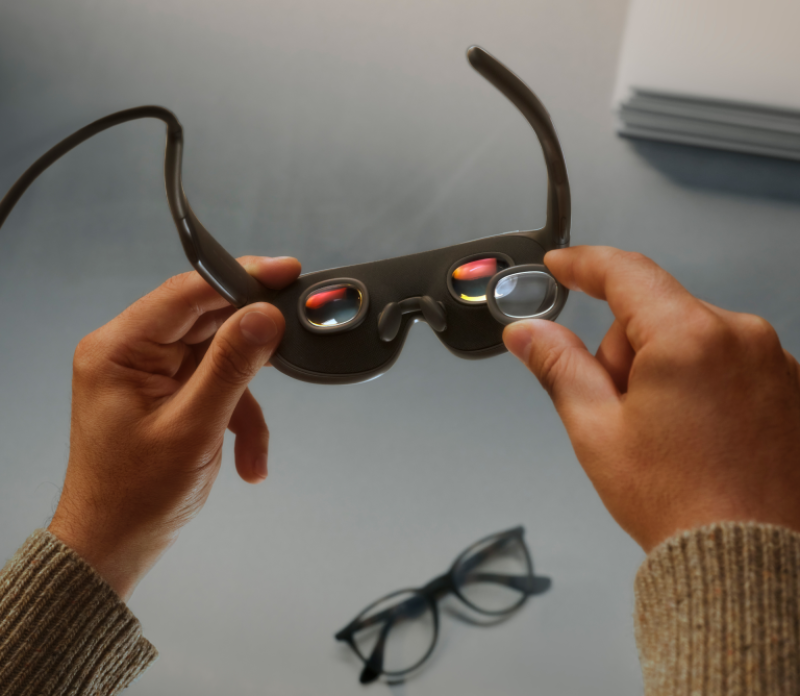
The glasses use dual 120Hz HDR micro-OLED displays with 2412 × 2288 pixels per eye and 37 PPD. The main compromise is field of view: 70° horizontal × 66° vertical, versus roughly 110° × 96° on Quest 3.
Snapdragon Reality Elite
The main processor, memory, storage and battery are housed in an external puck weighing about 300 grams.
Key hardware:
- Snapdragon Reality Elite
- 12GB RAM
- 128GB storage
- microSD expansion
- Up to 3 hours of high-resolution media playback
- 45W charging
Qualcomm claims Reality Elite delivers up to 60% higher GPU performance, 160% higher NPU performance and 30% higher CPU performance than Snapdragon XR2+ Gen 2, with up to 48 TOPS of AI performance.
Meta VR Glasses are powered by Qualcomm’s new Snapdragon Reality Elite processor.
Moving the SoC and battery outside the headset reduces heat and weight on the user's head without sacrificing standalone compute.
Eye and Hand Tracking
Unlike Quest 3, the new headset includes four-camera eye tracking, enabling eye-tracked foveated rendering.
It also supports:
- Hand tracking
- Face tracking
- Voice input
- Full-color passthrough
- Optional Touch Plus controllers
Existing Quest 3/3S controllers can be paired with the headset.

Meta VR Glasses vs Quest 3
The upgrade isn't universal.
Resolution increases from 2064 × 2208 to 2412 × 2288 per eye, while angular resolution rises from roughly 25 to 37 PPD. Weight drops from 515 g to about 100 g.
The trade-off is FOV: roughly 110° → 70° horizontally.
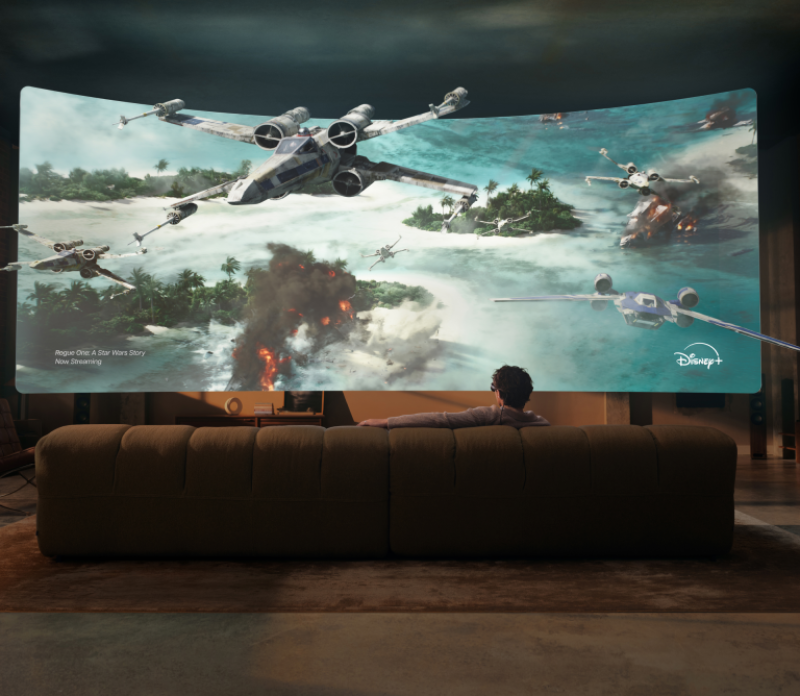
That makes the new headset better suited to high-density UI, virtual monitors, text and spatial-computing applications, while Quest 3 retains a substantially wider view for immersive VR.
External Display Support
The compute puck supports USB-C DisplayPort input, allowing compatible laptops, phones and gaming handhelds to output directly to virtual displays inside the headset.
Meta also retains compatibility with the existing Quest software ecosystem, reducing the amount of platform-specific work required from XR developers.
The key technical change is therefore architectural: Meta moved the CPU, battery and much of the thermal load off the user's head.
The result is a 100 g micro-OLED headset with eye tracking and significantly higher pixel density than Quest 3, at the cost of a narrower FOV, a wired external puck and a $1,299.99 starting price.