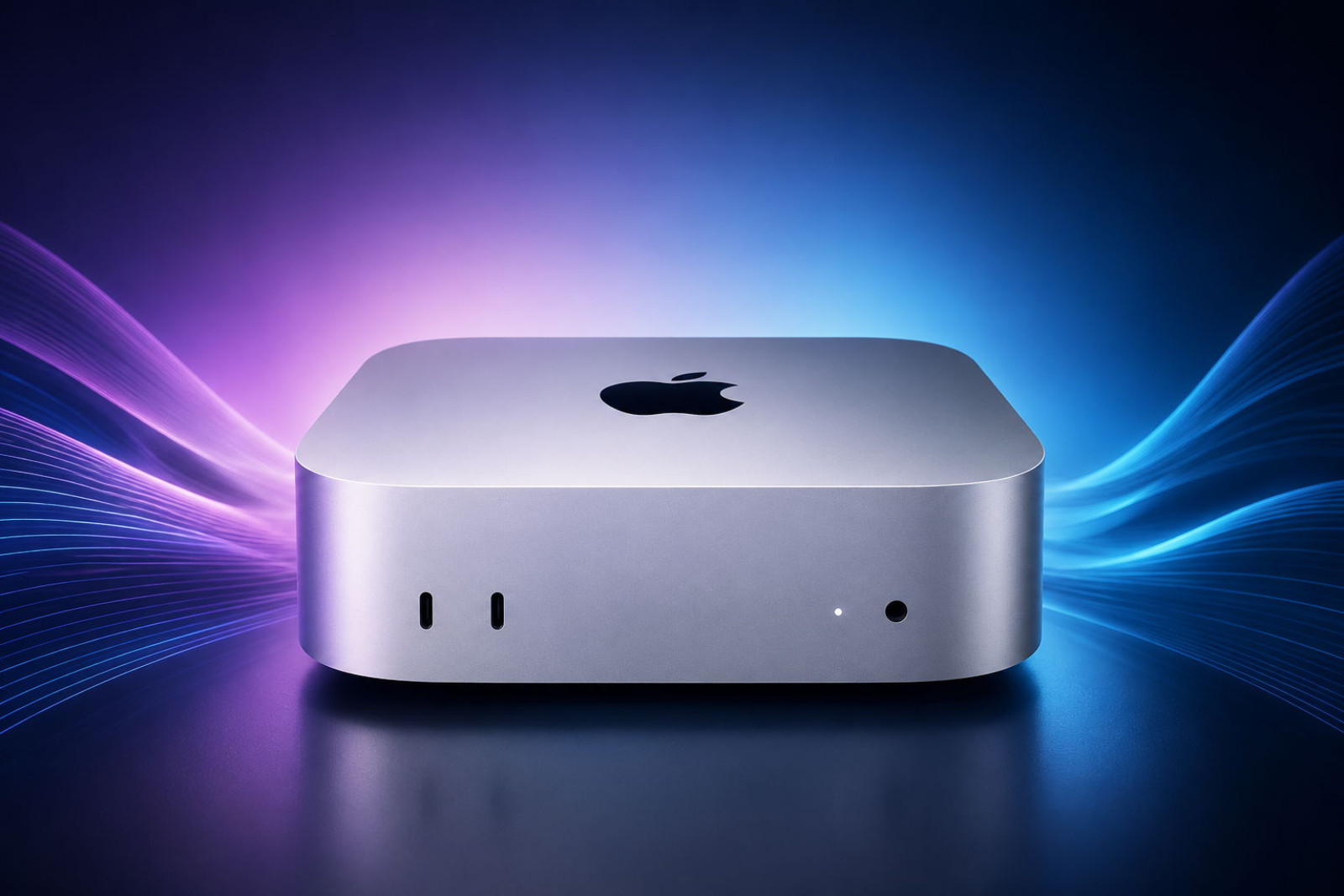
The most significant modification is the way the developers prioritize the processing of artificial intelligence on local hardware instead of increasing the performance of the central processing unit.
M6: Up to 4.8x Faster LLM Processing
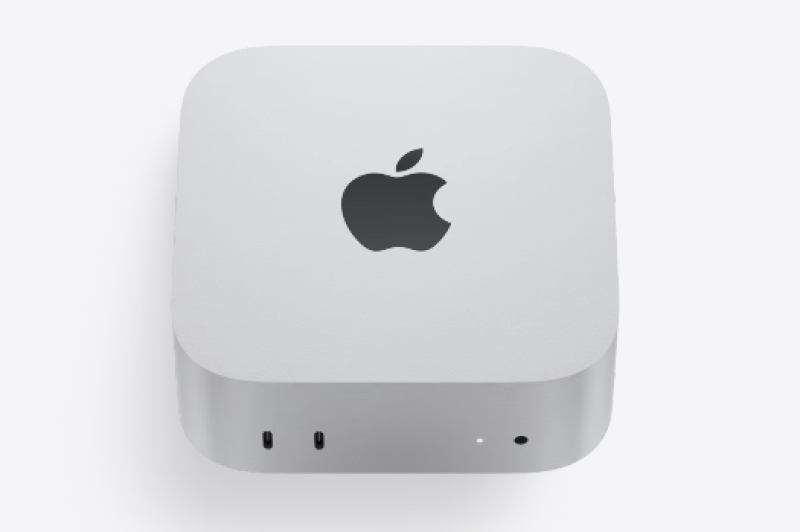
The M6 Mac mini contains a central processing unit with 12 cores and a graphics processing unit with 12 cores. There are Neural Accelerators inside each graphics processing core. And the device includes a Dual Neural Engine with 16 cores. It is compatible with 32GB of unified memory or less. The memory moves data at a rate of 170GB/s.
The Apple company provides a comparison between the M4 Mac mini and previous computer models:
- 4x faster AI performance
- 40% faster CPU performance
- 2x faster graphics and SSD performance
- 4.8x faster LLM prompt processing
- 2x faster ray-traced performance in Cyberpunk 2077
The M2 Ultra processes Large Language Model prompts at a speed that is up to 13.5 times higher than the rate of the original M1 chip.
The hardware modification is the primary improvement among the changes. Apple optimizes the Mac computers to execute artificial intelligence models on the internal hardware. In those operations, the speed of memory data transfer and the processing power of the graphics plus neural components are more significant than standard processor speed measurements.
M5 Pro Pushes the Mac mini Into Workstation Territory
The M5 Pro configuration is for a user who performs tasks that require a large amount of processing power.
| Specification | M6 | M5 Pro |
| CPU | 12 cores | Up to 18 cores |
| GPU | 12 cores | Up to 20 cores |
| Unified memory | Up to 32GB | Up to 64GB |
| Memory bandwidth | 170GB/s | 307GB/s |
| Thunderbolt | TB4 | TB5 |
Apple gibt an dass der M5 Pro Large Language Models bis zu viermal schneller verarbeitet als der M4 Pro. Das Bauteil berechnet Raytracing in der Software Blender zudem mit einer um den Faktor 1,4 höheren Geschwindigkeit.
The 64GB memory capacity and 307GB/s bandwidth are particularly relevant for local AI models, 3D rendering, video production and other memory-intensive workloads.
Multiple Mac minis Can Work as an AI Cluster
The M4 Pro Mac mini includes a feature for Thunderbolt 5 clustering. Apple states that users connect multiple M4 Pro Mac mini computers using Thunderbolt 5 cables to process artificial intelligence models that exceed the memory capacity of one device - this configuration is a functional option for software engineers who require onsite hardware for artificial intelligence development instead of using remote graphics processing units.
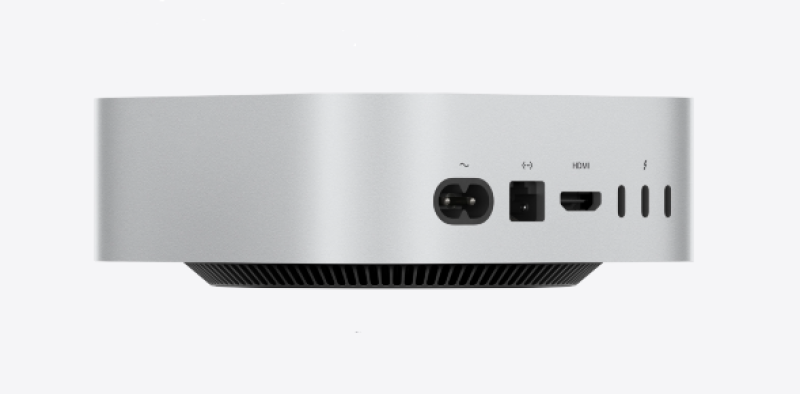
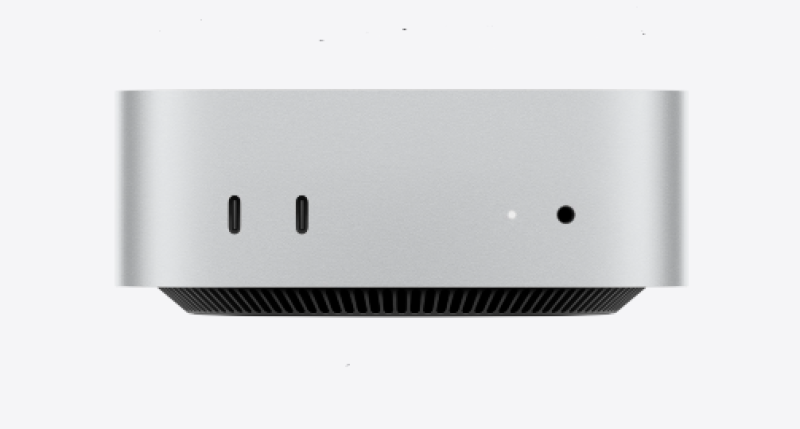
The manufacturer updated the communication systems to include Wi-Fi 7, Bluetooth 6 and 2.5Gb Ethernet. There is an option for users to include 10Gb Ethernet. The M6 computer contains three Thunderbolt 4 ports - but the M5 Pro computer contains three Thunderbolt 5 ports.
Apple also includes USB-C genlock to synchronize displays and cameras. The technology is present in the iPhone 17 Pro - this feature ensures that images from the hardware occur at the same time.
Pricing Changes the Mac mini’s Position
The M6 Mac mini is priced at $899 but the M5 Pro is priced at $1 699. Consumers are able to request the computers before they are released. On September 22, the computers are available for customers to acquire.
The cost of those computers is increasing, which causes the Mac mini to change from its usual function as a low cost desktop from Apple.
The company designs the device to function as a small computer for local artificial intelligence, the creation of software and the editing of video. It provides the hardware for three dimensional graphics tasks plus for games that require significant computing resources.
The primary improvement is not only that the Mac mini operates at a higher speed. It is that Apple installs enough graphics processing cores, data transfer capacity and artificial intelligence hardware into a small computer. There is a specific amount of those components to ensure that complex local artificial intelligence tasks function in a realistic manner.