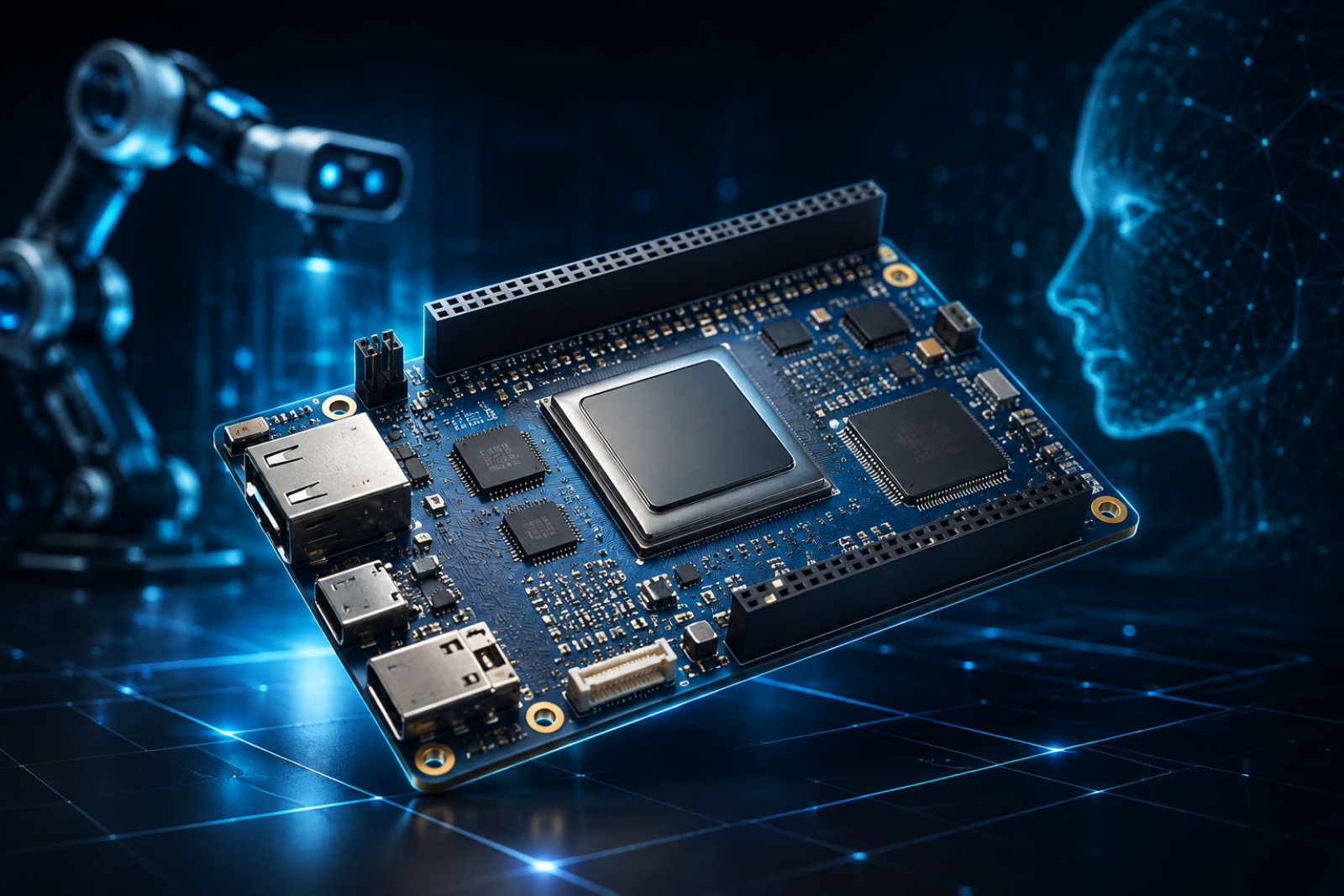
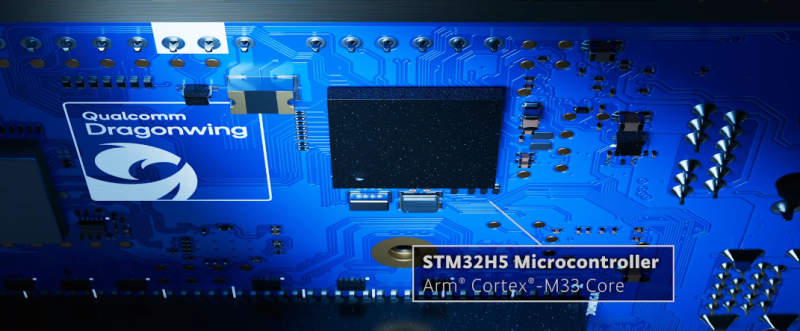
The hardware assembly connects the Qualcomm Dragonwing IQ-8275 to an STM32H5 microcontroller. The Qualcomm system-on-chip includes a central processing unit, a graphics processing unit and a neural processing unit. It performs 40 trillion operations per second when it executes artificial intelligence tasks - but the STM32H5 manages functions that require predictable and immediate responses. There are diverse computing resources on this circuit board.
Local LLMs and Vision Models
The VENTUNO Q is able to execute artificial intelligence models on the internal hardware. In this process the board processes the following examples:
- Qwen 3
- Gemma 4
- Qwen 3 VLM
The software operates to analyze written words, visual pictures and information from hardware sensors. It performs those actions locally instead of transmitting each command to an artificial intelligence service on a remote server. The intended tasks for this technology are mechanical robots, computer systems that interpret visual data, automated systems in factories and digital helpers that function without an internet connection.
The primary benefit is that users combine artificial intelligence inference and physical control on a single platform. To illustrate a vision model analyzes data from a camera feed on the Qualcomm processor. It sends the resulting data to the STM32H5 - this component is then able to move motors, monitor sensors or trigger actuators without delay.
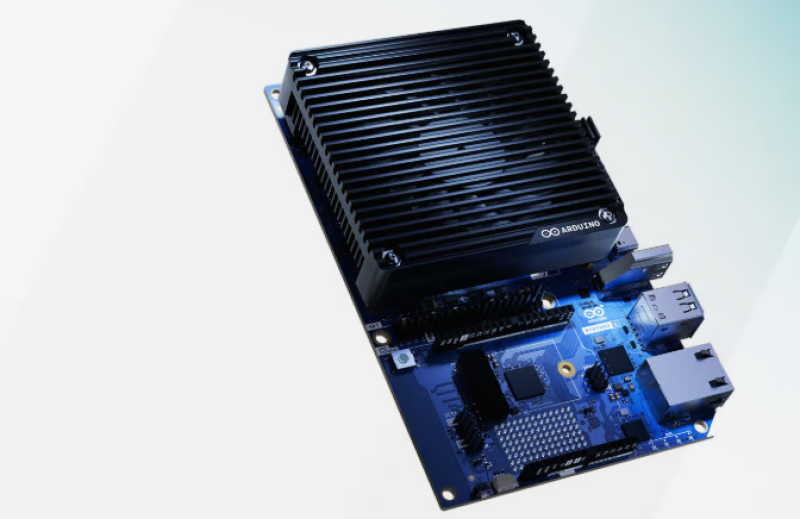
16 GB RAM and 64 GB Storage
VENTUNO Q includes:
- Qualcomm Dragonwing IQ-8275
- Up to 40 dense TOPS
- Dedicated NPU + CPU + GPU
- STM32H5 MCU
- 16 GB RAM
- 64 GB eMMC
- Expandable storage
- Ubuntu Linux
- Zephyr RTOS
The 16 GB of memory is particularly relevant for local generative AI, where available RAM limits the size and quantization level of models that can be deployed.
The VENTUNO Q is different from standard Arduino boards - it is a Linux edge AI computer that the developers integrated with a microcontroller for real time processing.
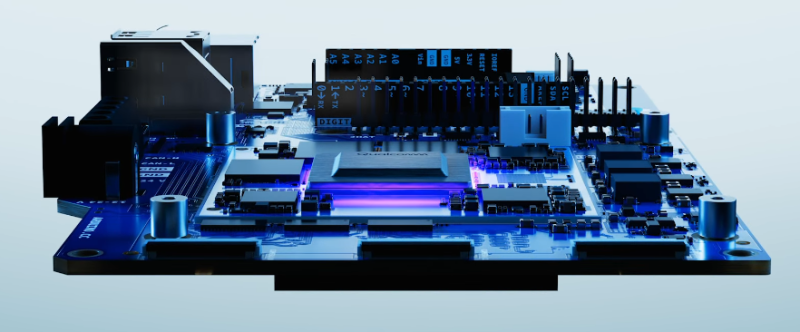
One Platform for AI and Real-Time Control
The designer creates the layout for computer frameworks that would require multiple individual parts if they used a different structure.
The user operates the application layer on a computer running Linux. The Neural Processing Unit increases the speed at which neural networks perform inference. And the STM32H5 manages the input, output and control tasks in real time.
The design of VENTUNO Q is effective for specific uses:
- autonomous robots;
- computer-vision systems;
- industrial inspection;
- predictive maintenance;
- intelligent cameras;
- local voice and AI assistants;
- AI-controlled machinery.
The significant distinction is that a device processes data and performs movements within its own internal hardware. A robot for example, perceives an object because it uses a vision model. It responds - using the microcontroller unit. The machine does not wait for a server to send a response over the internet.
Arduino Builds an AI Software Stack Around the Hardware
Arduino is supporting VENTUNO Q through Arduino App Lab and integrations with Hugging Face, Edge Impulse and Qualcomm AI Hub.
The objective is that we support a larger portion of the process for artificial intelligence creation. It starts with the selection and optimization of a model plus continues until the software runs on the hardware. We provide those functions so that developers do not need to construct the full sequence of programming tools.
The Arduino organization is linking the VENTUNO Q device to the Works with Arduino Certification Program. The program is a method to move from experimental models to items for sale.
Why VENTUNO Q Matters
The VENTUNO Q shifts Arduino into a hardware category that is significantly separate from previous versions. The primary technical details are 40 TOPS of artificial intelligence computing power and 16 gigabytes of random access memory. It is compatible with the Linux operating system. There is a dedicated component for real time control. It supports the execution of local large language models and vision language models.
The VENTUNO Q is not a tool that mainly rivals standard microcontroller boards. It is a product for edge AI systems. In those environments, a single device must process data and execute all operations within its own hardware.
sensor or camera input → AI inference → decision → physical action.
The platform is most suitable for industries that manufacture robots and hardware for edge artificial intelligence.